
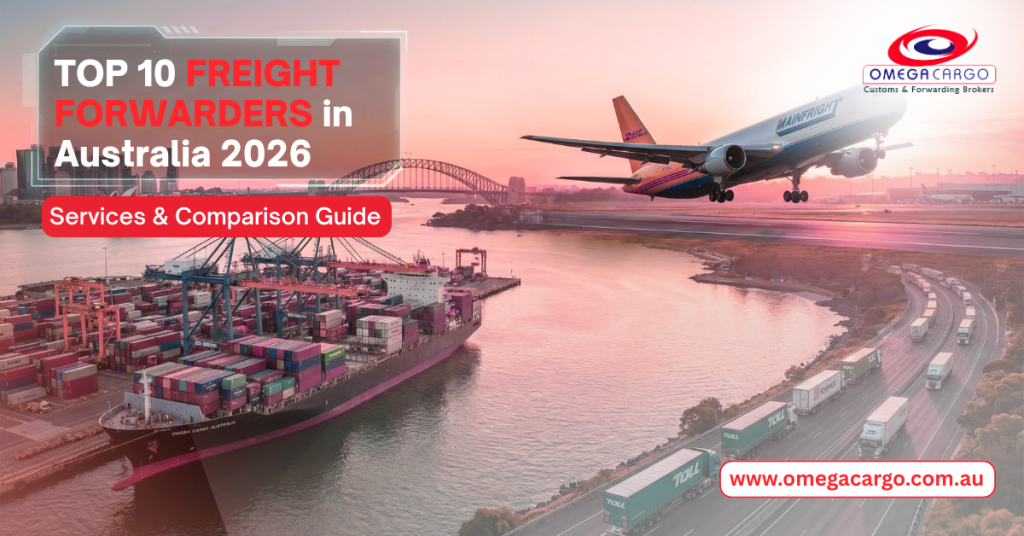
Every year, millions of containers move through Australia's ports — and the freight forwarder you choose decides whether that cargo arrives on schedule or gets stuck behind a paperwork error. Whether you're a small business importing your first shipment or an enterprise managing complex global supply chains, picking the right partner among the many freight forwarders in Australia can make or break your year.
Did you know that over 90% of the goods you see on Australian shelves arrived via a complex network of ships, planes, and trucks, yet nearly 30% of businesses struggle with shipping delays due to incorrect customs paperwork?
It’s a staggering figure. In a country as vast and island-bound as Australia, the supply chain isn't just a business function; it is the lifeline of the economy. Whether you are a small business owner importing your first batch of products or a large enterprise managing a complex global supply chain, choosing the right partner can make or break your year.
This guide ranks and compares the top 10 freight forwarders in Australia: services & comparison guide for 2026 — covering freight forwarding services Australia businesses actually rely on, customs clearance expertise, pricing signals, and who each of the best freight forwarders Australia has to offer is actually best suited for. If you're comparing options for international shipping Australia-wide, this comparison guide breaks down exactly what to expect from each provider.
Before comparing the top freight forwarders in Australia, it helps to understand what the role actually covers. A freight forwarder is the travel agent for your cargo. They don't typically own the ships or planes (though some do); instead, they use established carrier networks to negotiate routes, rates and schedules for you. In 2026, a top-tier provider of freight forwarding services Australia-wide also handles:
If you pick the right one, you sleep soundly. Pick the wrong one, and you might find your goods stuck at the port while storage fees eat your profit margin.
This list of best freight forwarders Australia businesses can choose from isn't ordered by company size alone. We evaluated each of the freight forwarders in Australia against five weighted criteria:
Comparing the best freight forwarders Australia has to offer is easier once you know the terminology each provider uses for freight forwarding services Australia-wide:
Here's our full breakdown of the top 10 freight forwarders in Australia for 2026, ranked according to the methodology above.
Best For: Personalized Service, Customs Clearance Expertise, and Small-to-Medium Enterprises (SMEs).
Omega Cargo stands out in the crowded Australian market by offering something the global giants often forget: a personal touch. While they have the global reach to handle shipments from anywhere in the world, they operate with the care and accessibility of a local partner.
specialize in managing Customs and Quarantine clearance for both commercial and personal shipments. Whether you are bringing in a container of retail stock by sea freight or urgent machinery parts by air freight, they handle it all. Their unique strength lies in navigating the complex Australian border regulations, ensuring your goods don't get stuck in red tape.
Key Services:
Why They Win: Omega Cargo provides a personalized service and a flexible approach to meet our clients' business needs, which is evident in our competitive pricing and superior customer service. You aren't just a tracking number here; you're a partner.
Pros: Excellent communication, deep knowledge of Australian customs laws, competitive pricing, flexible solutions.
Cons: May not have the massive owned-asset infrastructure of a global integrator (like owning their own planes), but they leverage top-tier carrier networks effectively.
Best For: Global Reach and Large-Scale Commercial Shipments.
When you think of international shipping Australia, DHL is often the first name that pops up. As a division of the Deutsche Post DHL Group, they are a behemoth in the industry. If you need to ship to or from a remote corner of the world, DHL likely has an office there. It's regularly named among the best freight forwarders Australia-based enterprises use for high-volume international shipping Australia-wide.
Key Services:
Why They Are Top 10: Their sheer scale allows them to secure cargo space even during peak seasons when other forwarders might struggle. They are a safe pair of hands for massive corporate accounts.
Pros: Unmatched global network, highly reliable, strong technology platforms.
Cons: Can be expensive for smaller businesses; customer service can feel impersonal and automated.
Best For: Sea Freight and Supply Chain Technology.
Kuehne + Nagel is frequently ranked as the world's largest sea freight forwarder. For Australian businesses that rely heavily on ocean imports from China, Europe, or the USA, K+N is a powerhouse. They have invested heavily in technology, giving you incredible visibility over your supply chain, and is consistently ranked among the top freight forwarders in Australia for enterprise-scale accounts. For Australian businesses importing heavily from China, Europe, or the USA, K+N's scale and its "Seaexplorer" route-visibility platform are significant advantages.
Key Services:
Why They Are Top 10: Their "Seaexplorer" platform is a game-changer, allowing you to choose routes based on reliability and CO2 emissions.
Pros: Industry-leading technology, massive capacity, sustainability focus. Cons: Complex pricing structures, better suited for large multinational corporations than small local importers.
Best For: Domestic Transport and Integrated Logistics within Australia.
Toll is an Australian icon. While they have a significant international footprint, their domination of the domestic landscape makes them unique. If you need to import goods and then distribute them to 50 different retail stores across Australia, Toll is a strong contender.
Key Services:
Why They Are Top 10: They are one of the top logistics companies in Australia because they own the trucks and the warehouses. The transition from international arrival to domestic delivery is often seamless.
Pros: Huge domestic network, expert in mining and resources sectors. Cons: Have faced some cyber-security and restructuring challenges in recent years; service levels can vary by region.
Best For: European Imports and Land Transport.
If your primary suppliers are in Europe, DB Schenker is a fantastic choice. Owned by the German rail operator Deutsche Bahn, they have a mastery of European land transport that connects perfectly with their global air and ocean network.
Key Services:
Why They Are Top 10: They are incredibly disciplined and efficient. Their Australian operations are robust, with major facilities in Sydney, Melbourne, and Brisbane.
Pros: Strong European network, excellent land transport capabilities, reliable rail freight options. Cons: Can be rigid in their processes; less flexible for non-standard shipments.
Best For: Culture, Transparency, and Trans-Tasman Shipping.
Mainfreight is a New Zealand-born company that has taken Australia by storm. They are famous for their unique culture—they promote from within and have a "ready, fire, aim" approach that values action and customer satisfaction above bureaucracy.
Key Services:
Why They Are Top 10: They treat your freight as if it were their own. Their team is highly motivated, and they are arguably the best freight forwarding services provider when it comes to shipping between Australia and New Zealand.
Pros: Amazing company culture leads to great service, strong ANZ network, transparent pricing. Cons: Their rapid growth means some branches are busier than others, occasionally impacting response times.
Best For: Pharma and Healthcare Logistics.
DSV has grown aggressively through acquisitions (like buying Panalpina) to become a global top-three player. In Australia, they have carved out a niche in handling sensitive freight, particularly pharmaceuticals and healthcare products that require temperature control.
Key Services:
Why They Are Top 10: If you are shipping temperature-sensitive goods or high-value pharmaceuticals, DSV’s specialized infrastructure is world-class.
Pros: Specialist knowledge in cold chain, massive global buying power. Cons: The integration of acquired companies can sometimes lead to disjointed internal systems.
Best For: Aerospace and Luxury Goods.
Note: The industry is consolidating, and brands like Bolloré are integrating with major shipping lines, but their specialized teams remain distinct.
Historically strong in Africa and Europe, this group excels in "white glove" services. If you are importing luxury fashion into Melbourne or aerospace parts into Brisbane, their attention to detail is high.
Key Services:
Why They Are Top 10: They understand that some cargo needs more than just transportation; it needs protection and security.
Pros: High-touch service for high-value goods, strong African network. Cons: Premium service often comes with a premium price tag.
Best For: Digital-First Experience for Modern Importers.
Aussie Freight represents the new wave of freight forwarding companies in Australia. They focus heavily on the digital experience, trying to make shipping freight as easy as booking an Uber.
Key Services:
Why They Are Top 10: For e-commerce businesses that want to manage everything online without calling a broker, their platform is very attractive.
Pros: Great user interface, easy for beginners, transparent online quotes. Cons: Less "human" intervention when complex problems (like a customs audit) arise.
Best For: Perishables and Aviation.
CT Freight is the largest independent international freight forwarder in Australia handling perishables. If you are exporting fresh produce or importing flowers, these are the experts.
Key Services:
Why They Are Top 10: They have a specific mastery over time-critical and temperature-critical shipments that generalist forwarders struggle to match.
Pros: The go-to experts for fresh food and plants, highly responsive 24/7. Cons: Extremely niche; if you aren't shipping perishables or aviation parts, their specialized value is lost on you.
The table below summarizes how each of these freight forwarders in Australia compares at a glance.
To help you decide, here is a quick comparison of the top contenders based on key business needs.
| Freight Forwarder | Best For... | Customs Focus | Network Size | Ideal Client |
| Omega Cargo | Personalized Service & Customs | High (Specialists) | Global Reach / Local Care | SMEs, Families, Retailers |
| DHL Global | Global Reach | Medium (Automated) | Massive (Global) | Large Corporates |
| Kuehne + Nagel | Sea Freight Volume | Medium | Massive (Global) | Volume Importers |
| Toll Group | Domestic Distribution | High | Strong Domestic | National Retailers |
| Mainfreight | Trans-Tasman Trade | High | Strong ANZ | Culture-focused Biz |
| DSV | Pharmaceuticals | High (Specialized) | Massive (Global) | Pharma/Healthcare |
| DB Schenker | Europe-Australia Trade | Medium | Strong Europe | Automotive/Industrial |
| Your Need | Recommended Forwarder |
|---|---|
| Small business / first-time importer | Omega Cargo or Aussie Freight |
| High-volume China-Australia sea freight | Kuehne + Nagel or DHL Global Forwarding |
| Pharmaceutical/cold-chain shipments | DSV |
| Personal effects / household relocation | Omega Cargo |
| Domestic distribution after import | Toll Group |
| Perishables / fresh produce export | CT Freight |
| Europe-Australia trade lane | DB Schenker |
| New Zealand-Australia trade | Mainfreight |
A freight forwarder moves your goods through the logistics chain (ships, planes, trucks). A customs broker legally clears those goods through the border. They are licensed separately, but many Australian companies — including Omega Cargo — are accredited to do both, which removes a handoff point and reduces delay risk.
In 2026, the Australian Border Force (ABF) uses AI-assisted targeting to flag higher-risk shipments for inspection. A single incorrect tariff code or a missing wood-packaging treatment certificate can hold your container at the port. A combined forwarder/broker reviews this before shipment, advising on:
Before engaging any freight forwarder in Australia, check their industry accreditation:
A freight forwarder without verifiable membership in at least one of these bodies should be treated with caution, regardless of how competitive their quote looks.
One of the most common questions about freight forwarding services Australia-wide is simply: what will it cost? Pricing varies by weight, volume (CBM), transport mode, and Incoterms — but as a general guide for 2026:
Always request an itemized, all-in quote — watch for forwarders who quote a low base rate but add undisclosed "admin," "documentation," or "handling" fees later.
The freight forwarding Australia landscape is changing. Here is what is impacting your shipments this year:
Customs brokers are now using AI to classify goods faster and more accurately. However, the human element remains vital for verifying complex items. The top-rated freight forwarders companies blend AI speed with human expertise.
Sustainability is no longer optional. Major companies now require "Scope 3" emissions reporting. Forwarders are offering "Green Lanes" (ships powered by methanol or LNG) and carbon offset programs.
The era of "Just-in-Time" is fading. After the disruptions of the 2020s, Australian businesses are holding more stock locally. This has increased the demand for freight forwarding companies in Sydney and Melbourne that offer integrated warehousing solutions.
With e-commerce booming, forwarders are now handling more small, frequent shipments rather than just massive containers. This requires agile freight forwarder international networks that can handle parcel freight as efficiently as pallets.
With so many freight forwarding companies in Australia, how do you pick "The One"? Use this checklist:
For a deeper walkthrough of this process, see our companion guide: How to Choose the Best Freight Forwarder in Australia.
If you are looking for reliable freight forwarding services that prioritize your peace of mind, Omega Cargo is the partner you need.
We understand that logistics is stressful. Dealing with foreign suppliers, shipping lines, and government officials can be overwhelming. We exist to take that weight off your shoulders.
Explore our service pages for Perth, Sydney, Adelaide, Brisbane, Melbourne, and Fremantle, or read our broader guide on choosing a freight forwarder in Australia.
Here are the most common questions we hear about freight forwarders in Australia and how to choose between them.
There is no fixed price. Costs depend on weight, volume (CBM), mode of transport (Air vs. Sea), and Incoterms (EXW, FOB, CIF). However, best freight forwarding companies will always provide a transparent itemized quote that includes freight, port charges, customs clearance, and delivery.
A freight forwarder moves the goods (logistics). A customs broker clears the goods through the border (legal). Many companies, like Omega Cargo, do both, which is the most efficient option for you.
Small businesses benefit from mid-sized forwarders who offer personalized attention. Large integrators often lack the flexibility SMEs need. Look for top-rated logistics companies that assign you a dedicated account manager.
Typically, sea freight from China to Australian main ports (Sydney/Melbourne/Brisbane) takes 12-18 days. However, this can vary based on the shipping line and port congestion.
Not all of them. Many big industrial forwarders only deal with registered businesses. freight forwarder like Omega Cargo that specializes in both commercial and personal shipments.
FCL (Full Container Load) means your cargo fills an entire container by itself; LCL (Less-than-Container Load) means it shares container space with other shippers' goods. FCL suits large volumes; LCL suits smaller shipments.
Ask for their ABF customs broker licence number and check CBFCA or IFCBAA membership, plus IATA accreditation for air freight. A legitimate forwarder will share this readily.
Generally a Commercial Invoice, Bill of Lading or Air Waybill, Packing List, and Certificate of Origin where applicable. Some goods also require DAFF biosecurity treatment certificates.
Kuehne + Nagel and DHL Global Forwarding have the largest dedicated China-Australia networks for high-volume importers; mid-sized forwarders like Omega Cargo suit SMEs wanting dedicated account management on the same lane.
Shipping doesn't have to be a headache. Whether you are scaling up your e-commerce business or moving your life across the ocean, you deserve a partner who watches your back.
Don't settle for being just another tracking number. Choose a partner that combines global reach with local expertise.
Contact Omega Cargo today for a free, no-obligation quote. Let us show you how easy international trade can be when you have the right team in your corner.


