
Choosing between freight forwarders in Australia is one of the most important decisions an importer or exporter makes. The forwarder you pick affects how smoothly your cargo moves, how well your customs paperwork is handled and how much stress lands on your desk when something goes wrong at the port.
Whether you are a small business bringing in your first shipment, an e-commerce seller restocking regularly or a manufacturer managing a complex supply chain, the right partner makes a real difference. In a country as large and trade-dependent as Australia, freight is not just a back-office task. It is how your stock reaches your shelves and your customers.
This guide compares ten well-known top freight forwarders in Australia, including global networks, Australian-founded operators and specialist providers. It explains the services each is commonly known for, the kind of business each may suit, and the questions you should ask before you sign up with any provider of freight forwarding services in Australia.
Before you compare providers, it helps to understand the role. A freight forwarder is like a travel agent for your cargo. Most forwarders do not own the ships or aircraft (some large groups do own trucks, warehouses or other assets). Instead, they use established carrier networks to arrange routes, space and schedules on your behalf.
A capable provider of freight forwarding services in Australia will usually help with:
Pick the right forwarder and most shipments run without drama. Pick the wrong one and you may find your goods held at the port while storage charges eat into your margin.
This guide is written by Omega Cargo, so we have listed ourselves first. The other nine companies are well-known names in the Australian market, and they are not presented in any order of merit. This is not an independent ranking or audit. It is a practical starting point to help you build a shortlist.
When comparing freight forwarders in Australia, we looked at five broad factors that matter to most importers:
Services, ownership and local capabilities change over time. Always check details directly with any provider before you book.
Comparing freight forwarding services is easier once you know the terms providers use. These are the essentials:
Here is our breakdown of ten freight forwarders operating in Australia, what each is commonly known for and the kind of shipper each may suit. The descriptions are general and based on publicly available information about each company.
May suit: small-to-medium businesses (SMEs) that want personal service and customs clearance support.
Omega Cargo is an Australian freight forwarder that combines international reach with the accessibility of a local partner. We work with overseas agents and carrier networks to move cargo to and from Australia, and we focus on keeping you informed at each step.
A core part of what we do is customs and quarantine clearance. Whether you are bringing in a container of retail stock by sea freight or urgent machinery parts by air freight, our team works to get your documents right first time so your goods are less likely to be held up at the border.
Key services:
Why consider us: we offer a personal, flexible approach built around your business needs. You deal with people who know your shipments, not just a tracking number.
Strengths: clear communication, Australian customs and biosecurity knowledge, flexible solutions for SMEs.
Worth knowing: we do not own aircraft or ships like some global integrators. Instead, we work with established carrier and agent networks to find suitable options for each shipment.
May suit: large commercial shippers that need a very wide global network.
DHL Global Forwarding is the freight forwarding division of DHL Group (formerly Deutsche Post DHL Group), one of the largest logistics groups in the world. If you need to ship to or from a remote location, DHL is likely to have a presence there. It is a familiar name for high-volume international shipping into and out of Australia.
Services commonly associated with DHL Global Forwarding:
Why it is on the list: large global networks can give shippers more options for securing cargo space, including during peak seasons.
Strengths: extensive global network and well-developed technology platforms.
Worth checking: as with any very large provider, smaller businesses should ask how pricing and account management work for their shipment volumes.
May suit: volume sea freight importers and businesses that value supply chain visibility tools.
Kuehne + Nagel (K+N) is a Swiss-headquartered logistics group with a large sea freight business. For Australian businesses that import heavily by ocean from China, Europe or the USA, K+N's scale and digital tools are often a drawcard. The company offers online platforms, including its Seaexplorer tool, designed to help shippers compare routes and schedule reliability.
Services commonly associated with Kuehne + Nagel:
Why it is on the list: a strong focus on sea freight and supply chain technology.
Strengths: digital visibility tools, large capacity and a sustainability focus.
Worth checking: pricing structures for large networks can be detailed, so ask for a clear, itemised quote and confirm how smaller accounts are managed.
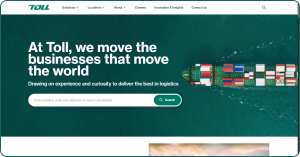
May suit: businesses that need domestic distribution across Australia after import.
Toll is an Australian-founded logistics company with a large domestic transport network as well as international forwarding operations. If you import goods and then need to distribute them to many stores or customers across the country, Toll is a common name on importers' shortlists.
Services commonly associated with Toll Group:
Why it is on the list: Toll is one of the best-known logistics companies in Australia, with its own domestic transport and warehousing infrastructure.
Strengths: a large domestic network and experience in the mining and resources sectors.
Worth checking: service experience can differ between regions and business units, so ask who will manage your account locally.
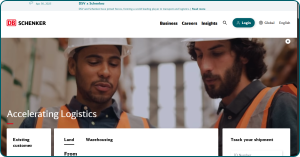
May suit: importers with European suppliers and land transport needs.
Schenker was long owned by the German rail operator Deutsche Bahn and built a strong reputation for European land transport connected to a global air and ocean network. It has since been acquired by DSV, and DSV is integrating Schenker's operations into its own network. If you already ship with Schenker, ask how the integration affects your account, contacts and systems.
Services historically associated with DB Schenker:
Why it is on the list: a long track record in European trade lanes and land transport.
Strengths: strong European network, land transport and rail freight experience.
Worth checking: large, process-driven networks can be less flexible for non-standard shipments, so discuss any special requirements up front.
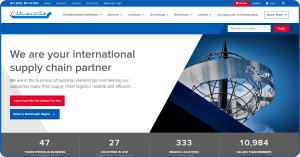
May suit: businesses trading between Australia and New Zealand.
Mainfreight is a New Zealand-founded logistics company with a significant Australian presence. It is known for its distinctive company culture and its strong trans-Tasman network.
Services commonly associated with Mainfreight:
Why it is on the list: a well-regarded option for freight between Australia and New Zealand.
Strengths: a customer-focused culture and a strong Australia–New Zealand network.
Worth checking: as with any growing network, response times can vary by branch, so ask about your local team.
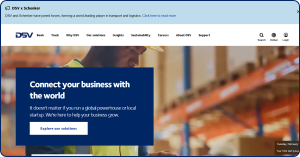
May suit: pharmaceutical, healthcare and other temperature-sensitive shippers.
DSV is a Danish-headquartered logistics group that has grown through major acquisitions, including Panalpina and Schenker. In Australia it is known for handling sensitive freight, particularly pharmaceuticals and healthcare products that need temperature control.
Services commonly associated with DSV:
Why it is on the list: specialist capability for temperature-sensitive and high-value healthcare cargo. Read more about cold chain logistics in Australia.
Strengths: cold chain expertise and large global buying power.
Worth checking: large integrations take time, so ask how systems and contacts will work for your account.
May suit: aerospace and luxury goods shippers.
Bolloré Logistics was acquired by the CMA CGM Group and is being brought together with CEVA Logistics, the group's logistics arm. The industry is consolidating, but specialist teams often remain in place. Historically strong in Africa and Europe, Bolloré became known for high-touch "white glove" services, such as moving luxury fashion or aerospace parts that need extra care.
Services historically associated with Bolloré Logistics:
Why it is on the list: some cargo needs more than transport. It needs extra protection and security.
Strengths: high-touch service for high-value goods and a strong African network.
Worth checking: premium handling usually costs more, so weigh the service level against your cargo's needs.
May suit: modern importers who prefer a digital-first experience.
Aussie Freight represents a newer style of freight forwarding company in Australia. It focuses on the online experience, aiming to make booking freight feel as simple as booking a ride-share.
Services commonly associated with Aussie Freight:
Why it is on the list: e-commerce businesses that want to manage everything online may find a digital platform attractive.
Strengths: a user-friendly interface, beginner-friendly booking and online quotes.
Worth checking: if your shipment becomes complex, for example during a customs query or audit, ask how much hands-on support is available.
May suit: perishables and aviation shippers.
CT Freight is an Australian independent freight forwarder known for handling perishables. If you export fresh produce or import flowers, it is a name you are likely to come across.
Services commonly associated with CT Freight:
Why it is on the list: a specialist focus on time-critical and temperature-critical shipments.
Strengths: specialist knowledge of fresh food, plants and aviation parts.
Worth checking: a niche specialist may be less relevant if you are not shipping perishables or aviation parts.
The table below summarises how these freight forwarders in Australia compare on the needs they are most commonly associated with. It is a general guide, not a rating.
| Freight forwarder | Commonly known for | Network focus | May suit |
|---|---|---|---|
| Omega Cargo | Personal service and customs clearance | International reach, local care | SMEs, importers, retailers, e-commerce sellers |
| DHL Global Forwarding | Global reach | Very large global network | Large corporates |
| Kuehne + Nagel | Sea freight and visibility tools | Very large global network | Volume importers |
| Toll Group | Domestic distribution | Strong domestic network | National retailers |
| DB Schenker (DSV) | Europe–Australia trade and land transport | Strong in Europe | Automotive and industrial shippers |
| Mainfreight | Trans-Tasman trade | Strong Australia–New Zealand network | Businesses trading with New Zealand |
| DSV | Healthcare and cold chain | Very large global network | Pharmaceutical and healthcare shippers |
| Bolloré Logistics (CMA CGM / CEVA) | Aerospace and luxury goods | Strong in Africa and Europe | High-value cargo shippers |
| Aussie Freight | Digital booking | Online platform | E-commerce and first-time importers |
| CT Freight | Perishables and aviation | Specialist lanes | Fresh produce and aviation shippers |
There is no single best freight forwarder for everyone. The right choice depends on your cargo, volumes, trade lanes and how much support you want. Use this as a starting point for your shortlist:
| Your need | Forwarders to consider |
|---|---|
| Small business or first-time importer | Omega Cargo or Aussie Freight |
| High-volume China–Australia sea freight | Kuehne + Nagel or DHL Global Forwarding |
| Pharmaceutical or cold chain shipments | DSV |
| Customs clearance support with a personal contact | Omega Cargo |
| Domestic distribution after import | Toll Group |
| Perishables or fresh produce export | CT Freight |
| Europe–Australia trade lane | DB Schenker (DSV) |
| New Zealand–Australia trade | Mainfreight |
If you import from China, our guide to freight shipping from China to Australia explains the route, the main cost drivers and common delays.
A freight forwarder moves your goods through the logistics chain by ship, aircraft and truck. A customs broker lodges the customs paperwork that legally clears those goods through the Australian border. In Australia, customs brokers are licensed by the ABF. Some companies offer both services, which removes a handoff point between providers and can reduce the risk of delays. Omega Cargo offers freight forwarding together with customs and quarantine clearance. For a fuller explanation, read freight forwarder vs customs broker.
The Australian Border Force (ABF) uses risk-based assessment to select shipments for inspection. A single incorrect tariff classification or a missing treatment certificate for timber packaging can see your container held at the port. A provider that handles both freight and customs can review these points before your goods ship, including:
Paperwork errors are one of the most common causes of hold-ups. See our guide to document errors that cause customs delays.
Before you engage any freight forwarder in Australia, check their licences and industry memberships:
Be cautious with any forwarder that cannot show a verifiable licence or membership of at least one relevant industry body, however attractive their quote looks.
One of the most common questions about freight forwarding services in Australia is simply: what will it cost? There is no fixed price. Freight forwarding costs depend on your cargo type, weight, volume (CBM), transport mode, origin and destination, Incoterms, carrier availability and prevailing market conditions.
Always ask for an itemised, all-in quote. Watch for providers that quote a low base rate and then add undisclosed "admin", "documentation" or "handling" fees later. For a step-by-step method, see our freight cost calculator guide.
Want a clear picture for your own cargo? Request a tailored freight quotation from Omega Cargo and we will itemise the charges that apply to your shipment.
The freight forwarding landscape in Australia keeps evolving. These are some of the longer-term trends that can affect your shipments.
Customs brokers increasingly use software and automation to help classify goods and prepare declarations. Human expertise is still vital for checking complex items, and the best freight forwarding companies combine technology with experienced people.
Sustainability is becoming a bigger part of procurement. Many large companies now ask suppliers for emissions data, including "Scope 3" supply chain emissions. Some forwarders and carriers offer lower-emission transport options and carbon reporting tools.
After major global supply chain disruptions, many Australian businesses have moved away from pure "just-in-time" ordering and hold more stock locally. This has increased demand for freight forwarders in Sydney, Melbourne and other capital cities that can offer integrated warehousing.
The growth of e-commerce means forwarders handle more small, frequent shipments as well as full containers. That calls for international networks that can manage parcel freight as efficiently as pallets.
With so many freight forwarding companies in Australia, how do you choose? Use this checklist:
Many problems come from avoidable errors. Our article on freight forwarding mistakes importers make covers the most common ones. For a deeper walkthrough, see our companion guide: How to Choose the Best Freight Forwarder in Australia.
If you want reliable freight forwarding services and a team that keeps you informed, Omega Cargo is ready to help.
We know logistics can be stressful. Dealing with overseas suppliers, shipping lines and government agencies takes time. Our job is to take that load off your shoulders.
Explore our freight forwarding services in Perth, Fremantle, Adelaide, Brisbane, Sydney and Melbourne, or read our broader guide to choosing a freight forwarder in Australia.
Here are the questions we hear most often about freight forwarders in Australia and how to choose between them.
There is no fixed price. Costs depend on your cargo's weight and volume (CBM), the transport mode (air or sea), the route, your Incoterms (such as EXW, FOB or CIF), carrier availability and market conditions. A good freight forwarder will give you a transparent, itemised quote covering freight, port charges, customs clearance and delivery.
A freight forwarder arranges the movement of goods. A customs broker, licensed by the ABF, clears goods through the border. Some companies, including Omega Cargo, offer both freight forwarding and customs clearance, which means fewer handoffs for you.
Small businesses often benefit from small or mid-sized forwarders that offer personal attention and flexibility. Look for a provider that gives you a dedicated contact, explains your quote clearly and has experience with your type of cargo.
No. This guide is written by Omega Cargo, which is listed first. The other companies are well-known freight forwarders in Australia, presented in no particular order. Use the list to build a shortlist, then compare quotes, licences and service terms directly.
Sea freight transit times depend on the origin and destination ports, the shipping line's schedule, transhipment, port conditions and customs clearance. Contact us for a shipment-specific transit estimate, or read how long it takes to ship from China to Australia.
Not all of them. Some forwarders work only with registered businesses. If you need to ship personal effects, ask each provider whether it accepts private shipments and what documents it will need from you.
FCL (Full Container Load) means your cargo fills an entire container on its own. LCL (Less than Container Load) means it shares container space with other shippers' goods. FCL usually suits large volumes, while LCL usually suits smaller shipments. Our FCL vs LCL comparison explains the trade-offs.
Ask whether customs clearance is handled by an ABF-licensed customs broker and request the licence details. You can also check membership of CBFCA or IFCBAA, and IATA accreditation if they book air freight directly with airlines. A legitimate forwarder will share this readily.
Generally you need a commercial invoice, a bill of lading or air waybill, a packing list and, where applicable, a certificate of origin. Some goods also need import permits or DAFF biosecurity treatment certificates. Check the import conditions for your product before it ships.
Large global networks such as Kuehne + Nagel and DHL Global Forwarding often suit high-volume importers on the China–Australia route. Smaller and mid-sized forwarders like Omega Cargo can suit SMEs that want a dedicated contact on the same lane. Compare a few itemised quotes before you decide.
Shipping does not have to be a headache. Whether you are growing an e-commerce business or bringing in regular stock for your shop or factory, you deserve a freight partner who keeps you informed and watches the details.
Contact Omega Cargo to discuss your shipment requirements and request a tailored freight quotation, or speak with our customs and freight team about your next import or export.


