
The Australian Border Force (ABF) processes over 50 million international mail items and millions of cargo containers every single year, yet only a small fraction are physically opened? If you have ever shipped goods down under or arrived at an airport and wondered, "how does customs inspection work?" you are definitely not alone. The customs inspection process in Australia is known worldwide for being incredibly thorough, highly advanced, and strictly enforced. Whether you are an online shopper waiting for a package, a business owner importing commercial goods, or a traveler bringing items from overseas, understanding the Australian customs inspection process is crucial to avoid delays, fines, or seized goods.
The customs inspection process in Australia is a systematic procedure conducted by the Australian Border Force (ABF) to verify that imported goods comply with Australian laws, regulations, and safety standards. Understanding how customs inspection works is essential whether you're a business importing commercial goods or an individual receiving international packages.
This comprehensive step-by-step guide explains the complete customs inspection procedure from arrival to clearance, what happens during customs inspection, the technology and methods used, typical timelines, and what triggers an inspection. The Australian customs clearance process involves multiple stages including electronic risk assessment, x-ray scanning, documentation review, and potentially physical examination and biosecurity checks. By understanding the customs inspection steps, you can better prepare your shipments, ensure compliance, and expedite the clearance process. This guide covers everything about customs inspection in Australia, including new technologies, procedures, and best practices.
From the moment your shipment arrives to the final clearance approval, we will uncover what happens during customs inspection, what triggers a customs check in Australia, and how you can prepare to breeze through the border.
The customs inspection process is a mandatory regulatory procedure where government authorities evaluate goods, baggage, and mail entering or leaving the country. This customs screening process ensures that all imports comply with national laws, correct taxes are paid, and no prohibited or harmful items cross the border.
In Australia, the primary agency responsible for border security is the Australian Border Force (ABF). ABF inspection officers work tirelessly at airports, seaports, and mail processing centers. They work hand-in-hand with the Department of Agriculture, Fisheries and Forestry (DAFF) to handle the biosecurity inspection aspects of the customs entry process.
Under the Customs Act 1901 and the Biosecurity Act 2015, the Australian Border Force and DAFF have sweeping legal powers. They have the authority to stop, detain, open, and examine any goods crossing the border. If you are wondering, "can customs open your package?" the answer is a resounding yes—they have full legal jurisdiction to do so without asking for your prior permission.
The Australian customs inspection procedure exists to protect the country's economy, society, and unique environment. The customs examination process prevents illegal drugs, weapons, counterfeit goods, and devastating agricultural pests from entering the country. Furthermore, it ensures fair trade by enforcing proper duty assessment and GST calculation on imported goods.
Not all inspections are the same. The customs check Australia uses includes:
Every single item entering Australia undergoes some form of risk assessment customs check. Whether it's a multi-million-dollar commercial shipment or a postcard, it is processed. However, the depth of the Australian customs inspection varies significantly based on the import goods examination category.
When you arrive at an international terminal, your passenger baggage inspection begins before you even realize it. From detector dogs roaming the carousels to the declaration card you fill out, traveler baggage inspection is a high-priority customs screening process.
For international shoppers, mail customs inspection is highly automated. Millions of parcels go through the mail center customs facilities, where parcel inspection customs protocols rely heavily on X-ray scanners and automated sorting.
Commercial import inspection is rigorous. Businesses must go through a formal business customs clearance process. Cargo inspection Australia involves detailed document checks and targeted container examination.
If you use DHL, FedEx, or UPS, your express courier customs process is typically expedited. Because these companies pre-lodge information, the express customs clearance is much faster, though shipments are still subject to X-ray and physical checks.
Sea freight involves massive volumes. Container inspection customs procedures utilize giant drive-through X-ray portals and targeted physical unpacking for high-risk shipments.
Air cargo terminal inspections are built for speed and security. Because air freight is usually high-value or urgent, the customs clearance stages are accelerated using advanced electronic screening and trace detection.
One of the most common questions is: what triggers customs inspection? The ABF uses a sophisticated risk-based targeting system. Here is what puts your shipment in the spotlight.
The customs clearance process Australia relies on the Integrated Cargo System (ICS). This system uses complex AI algorithms and robust cloud infrastructure trends (scalable data processing) to assign a risk score to every shipment. High-risk shipments are immediately flagged for a detailed Australian customs inspection.
Do all packages go through customs inspection? Yes, electronically and usually by X-ray. But what about physical checks? While many are targeted, a random customs check is always possible. Random selection ensures compliance and helps test new customs detection methods.
Risk indicators include vague item descriptions (e.g., "gift" or "parts"), unusually low declared values, poor packaging, or handwritten customs declaration forms. These are massive red flags that will trigger an import documentation inspection.
The Australian Border Force inspection teams work with international intelligence. If a sender, receiver, or specific address is on a watch list, an intelligence-led inspection is guaranteed.
If you have a history of importing undeclared items or failing a biosecurity inspection Australia check, your future shipments will face a targeted inspection customs process.
Shipments from countries known for drug production, counterfeit manufacturing, or specific agricultural diseases are automatically considered high-risk shipments.
Certain goods always trigger scrutiny. Electronics, pharmaceuticals, food, and wooden products have a much higher likelihood of undergoing a physical customs inspection.
If the weight on the bill of lading inspection doesn't match the commercial invoice customs declaration, the shipment will be held.
If an X-ray screening customs check reveals an anomaly—like a hidden compartment, unusual density, or organic material—it will immediately trigger a physical cargo examination customs check.
If drug sniffing dogs or biosecurity dogs show interest in a parcel, a physical baggage inspection or package customs inspection will immediately follow.
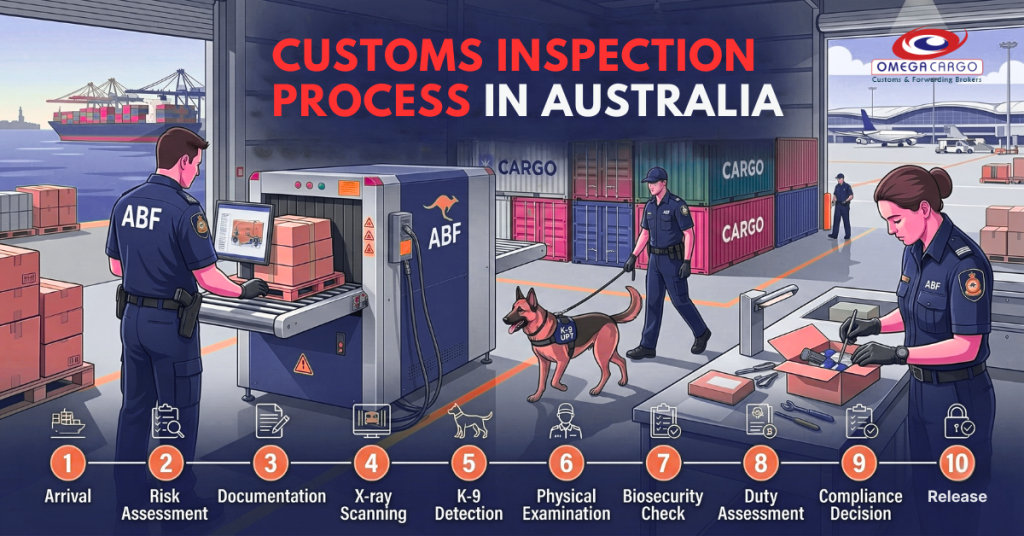
To truly grasp how does customs inspection works, we need to look at the step by step customs inspection process. Here are the 10 customs clearance stages your goods go through.
The customs paperwork check is the foundation of the clearance process. ABF officers scrutinize your commercial invoice customs details, packing list, and certificates. Common errors like missing HS codes or vague descriptions cause massive delays. Ensuring your digital and paper documentation matches perfectly is critical.
How do customs check packages without opening them? They use advanced non-intrusive inspection tools. Modern CT scanning customs technology provides 3D, slice-by-slice images of a package. These x-rays can detect density differences, separating organic materials (like drugs or food) from inorganic materials (like weapons).
When an anomaly is found, a physical customs inspection is triggered. Officers carefully open the package to see what happens at Australian customs firsthand. They verify the condition, count the items, and look for concealed goods. They are trained in careful re-packing procedures, though the importer ultimately bears responsibility for proper initial packaging.
The ABF relies heavily on detector dogs customs units. These highly trained animals include drug sniffing dogs, explosive detection dogs, and biosecurity dogs. They can detect microscopic traces of contraband or food in a crowded airport or massive freight terminal inspection area in seconds.
If suspicious substances are found, trace detection and chemical testing are conducted on the spot. Vapor detection devices and handheld chemical analyzers can identify narcotics, explosive residues, and prohibited chemicals within minutes.
The DAFF conducts the quarantine inspection process. This visual and microscopic examination focuses heavily on pest detection. If they find bugs, seeds, or uncertified wood, they will mandate costly treatment (like fumigation) or immediate destruction of the goods.
During an Australian customs inspection, officers are highly trained to spot specific threats. What do customs inspectors look for?
A common anxiety for importers is: how long does customs inspection take in Australia? The customs processing time varies heavily based on the shipping method and whether issues are found.
Your customs wait time is influenced by the volume at the port, weekend/holiday arrivals, documentation completeness, and whether an intensive biosecurity inspection Australia procedure is required.
The airport customs inspection starts with your incoming passenger card. Based on your answers, you are directed to the green channel (exit) or red channel (declare). If you are selected for a random customs check, officers will review your duty-free allowances and conduct a thorough passenger baggage inspection.
At the international mail center customs facility, the mail inspection process is a well-oiled machine. Items run on conveyor belts through X-ray machines. While all packages are scanned, only a small percentage are physically opened based on the X-ray results or detector dog alerts.
Express courier customs processing is highly automated. Your customs broker submits digital paperwork while the plane is still in the air. This allows for an expedited clearance status the moment the goods land.
Sea freight requires heavy lifting. The seaport customs process involves pre-arrival processing. If a container is flagged, it is moved to a specialized freight terminal inspection area where ABF officers physically break the seals and conduct a detailed cargo examination customs check.
Air freight cargo inspection blends the volume of sea freight with the speed of express. Security screening and documentation requirements are incredibly strict, ensuring quick release procedures if everything is compliant.
To keep the customs clearance process Australia running fast, the ABF utilizes state-of-the-art customs technology.
Under Australian law, what powers do customs officers have? They have absolute authority to secure the border.
They can search any person, baggage, vehicle, or cargo container entering the country.
They have the right to question you about your travels, your goods, and your identity.
If they find prohibited items detected, they can execute an immediate seizure by customs.
In cases of serious smuggling or criminal activity, ABF officers have the power to detain and arrest.
While they have vast powers, you have rights. You have the right to professional conduct, clear information about why your goods are held, and the right to appeal duty assessments.
Not every inspection ends in a fast customs clearance. Here is what happens if the ABF finds an issue:
Australia’s ecosystem is fragile, making the biosecurity inspection Australia process one of the strictest in the world.
DAFF works alongside the ABF. Their primary goal is agricultural inspection and pest detection.
Any declaration of food, plant material customs, animal products, or used outdoor equipment will trigger a check.
All wooden pallets and crates must carry the ISPM 15 stamp, proving they have been heat-treated or fumigated. Failure here means instant quarantine.
If pests are found, you will be given a choice: pay for expensive chemical treatment, export the goods back, or face destruction of the goods.
The financial clearance step is vital. During the valuation inspection, officers ensure you aren't dodging taxes.
The customs screening process routes cargo into three distinct pathways:
Classification is determined by the AI in the Integrated Cargo System, assessing everything from your supplier's history to the specific HS codes used.
Want an accelerated clearance? Here is your compliance preparation checklist:
The first-time importer process usually involves higher scrutiny. The ABF takes an educational approach, ensuring you understand trade compliance inspection rules.
Businesses that prove reliable can join the Australian Trusted Trader program, gaining AEO status, which results in heavily reduced inspections and priority clearance.
Chemicals and batteries face specialized safety protocols and require expert involvement during any cargo examination customs check.
Once your goods pass the customs examination process, the post-inspection phase begins:
To understand the scale of the border customs check:
While the ABF has extensive powers, you have specific rights:
It's easy to confuse the terminology during the customs clearance process Australia:
The Australia customs process is uniform, but facilities vary:
How long does customs inspection take in Australia? Standard electronic clearance takes hours. If flagged for a physical or biosecurity inspection, it can add anywhere from 2 to 10 days to your shipment timeline.
Do all packages go through customs inspection? Yes, 100% of packages are electronically risk-assessed and typically pass through an X-ray scanner. However, only a small percentage (around 5-10%) undergo a physical opening and inspection.
Can customs officers open my package without permission? Absolutely. Under the Customs Act, ABF officers have full legal authority to open and inspect any package entering Australia without needing your consent or a warrant.
What happens if my package is selected for inspection? It will be securely opened, the contents checked against the commercial invoice, and examined for prohibited items or biosecurity risks. If it passes, it is carefully resealed with a customs inspection tape and sent on its way.
How do I know if my package is being inspected? If you are tracking your package online, the shipment tracking customs status will typically show "Held by Customs," "Customs Clearance in Progress," or "Awaiting Customs Clearance."
What triggers a customs inspection? Red flags include vague descriptions, high-risk origin countries, poor history of compliance, X-ray anomalies, alerts from detector dogs, or simply being selected for a random compliance check.
Can I be present during cargo inspection? For commercial cargo, your licensed customs broker can sometimes be present or arrange for specific representation, but general public access to secure inspection facilities is strictly prohibited.
How thorough are customs inspections? They range from a quick visual check (5 minutes) to an intensive examination where a full sea container is completely unpacked, every item counted, and chemical trace detection tests applied (taking several days).
Can customs inspection damage my goods? Officers are trained to be careful, but they must do their job. If goods are poorly packed by the sender, the unpacking and repacking process can cause wear. Proper packaging is the importer's responsibility.
How do I track my shipment through customs? You can track customs inspection progress using your courier's tracking number. For commercial freight, your customs broker will use the Integrated Cargo System (ICS) to give you real-time customs updates.
What if customs finds something wrong? Depending on the severity, you may just need to pay extra duty, provide a missing permit, pay for biosecurity fumigation, or in the case of illegal items, face seizure and potential prosecution.
Navigating the customs inspection process in Australia doesn't have to be a stressful ordeal. By understanding the step-by-step customs inspection procedure, knowing what triggers an inspection, and ensuring your documentation is flawlessly prepared, you can set yourself up for an express customs clearance. Remember, the Australian Border Force inspection is designed to protect the country, not to purposely delay legitimate trade.
Be proactive, use accurate descriptions, pay your duties promptly, and when in doubt, consult a licensed customs broker.
Ready to streamline your next import? 👉 Click here to explore our professional Customs Brokerage Services and ensure your next shipment clears without a hitch!


