
Australian trade volumes are projected to increase by a massive 70% over the next decade? With over 2.2 million Australian jobs relying on trade, the flow of goods into the country is the lifeblood of the economy. But if you’ve ever tried to bring goods across the border, you know it’s not just about shipping a box from Point A to Point B. It’s about navigating a complex web of regulations, biosecurity checks, and tax laws that can feel like a maze.
Whether you are a first-time importer bringing in a small batch of electronics or a seasoned business manager overseeing shipping containers of machinery, getting Customs Clearance Australia right is critical. One wrong digit on a form can lead to weeks of delays, hefty fines, or even your goods being destroyed.
In this comprehensive Customs Clearance Australia: Step-by-Step guide, we will walk you through everything you need to know. We’ll break down the jargon into plain English, show you exactly what documents you need, and help you avoid the expensive traps that catch many importers off guard.
At its simplest, customs clearance Australia is the process of getting permission from the Australian government to move goods into (import) or out of (export) the country. It involves declaring what you have, paying any necessary taxes, and proving that your goods are safe to enter.
In Australia, this process is managed primarily by two giant government bodies:
You might wonder why import clearance Australia feels tougher than in other countries. Australia is an island nation with a delicate environment. Pests that are common elsewhere—like the Brown Marmorated Stink Bug or Khapra Beetle—could devastate Australia's agriculture. That is why Australian border force clearance involves rigorous checks not just for taxes, but for dirt, seeds, and insects.
One of the most common questions we hear is: "Can I do this myself?" or "Do I need a customs broker in Australia?"
Technically, yes, self customs clearance Australia is possible. However, the system used to lodge declarations—the Integrated Cargo System (ICS)—is complex, requires digital certificates to access, and carries significant legal liability.
If you are importing goods worth less than AUD $1,000, the process is often handled automatically by your courier (like Omega Cargo, DHL, FedEx, or AusPost) or via a simple Self-Assessed Clearance (SAC). You typically do not need to hire a broker for these small, low-value shipments unless they contain restricted items like alcohol or tobacco.
For commercial shipments valued over AUD $1,000, or for restricted goods (like food, chemicals, or wooden products), hiring a customs broker Australia is highly recommended. A licensed customs clearance agent knows the customs clearance procedures inside out. They can:
If you are a business, the cost of a broker is often far less than the cost of a single mistake or storage bill.
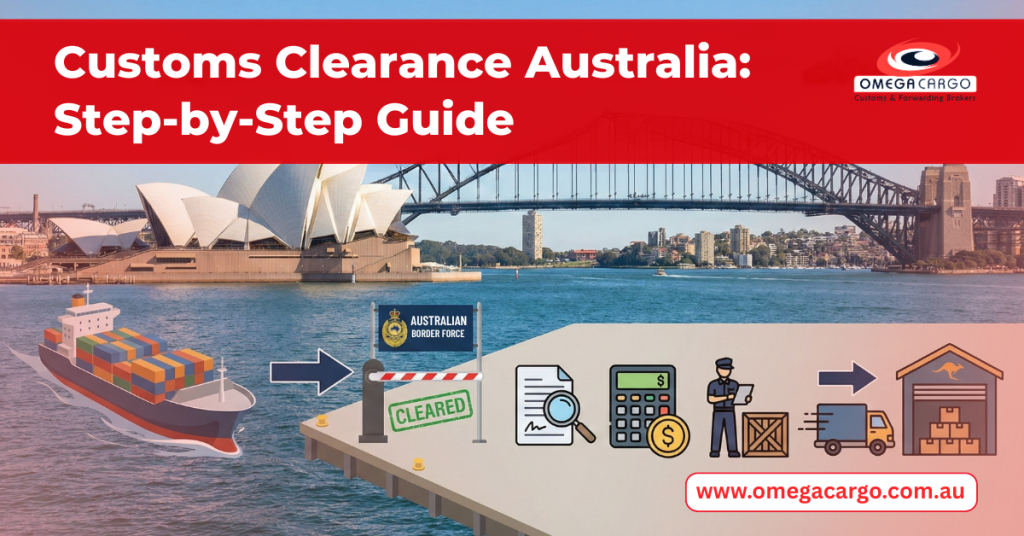
Here is your detailed, step by step customs clearance Australia walkthrough. Follow this roadmap to ensure your goods move from the port to your door without a hitch.
Before your goods even leave the factory overseas, you need to know exactly what they are in the eyes of the ABF. This means finding the correct tariff classification Australia (also known as an HS Code).
Tip: Don't guess. Use a customs tariff classification expert to get this right.
Paperwork is the fuel that moves your cargo. Without the right customs clearance documents required Australia, your shipment goes nowhere. You must gather these from your supplier before the goods arrive.
(See the detailed "Essential Documents" table below for a full checklist).
Once the documents are ready, a declaration must be lodged with the ABF via the integrated cargo system Australia.
This is where specific details like the "Origin Criteria" (to claim Free Trade Agreements) are entered.
You cannot clear customs until you pay the bill. The ABF will issue an invoice based on your declaration. This usually includes:
Use an import duty calculator Australia or ask your broker for a landed cost estimate before shipping.
This is the "Australia factor." Even if customs is happy, DAFF might want to inspect your goods.
Once ABF and DAFF give the "Clear" status, your goods are released. Your freight forwarder customs clearance team will then arrange for a truck to pick up the container from the wharf or airport and deliver it to your warehouse.
Missing paperwork is the cause of customs clearance delays Australia. Ensure you have these documents on hand.
| Document Name | Why You Need It |
| Commercial Invoice | The proof of purchase. It must show the seller, buyer, description of goods, currency, Incoterms, and value. Commercial invoice customs Australia standards are strict—generic invoices often get rejected. |
| Packing List | Details exactly how the goods are packed (cartons, pallets, weight, dimensions). Essential for packing list customs clearance checks. |
| Bill of Lading (Sea) / Air Waybill (Air) | The contract of carriage. It proves you own the goods or have the right to receive them. |
| Packing Declaration | (Sea Freight Only) A mandatory declaration stating if straw, timber, or bamboo was used in packing the container. |
| Certificate of Origin | Required if you want to claim 0% duty under a free trade agreement customs deal (e.g., ChAFTA with China). |
| Fumigation Certificate | Required for goods susceptible to pests or during specific seasons (like BMSB season). |
| Import Permit | Necessary for restricted items like firearms, certain chemicals, or specific foods. |
If you are wondering what documents are needed for customs clearance, this table covers 90% of general cargo.
Budgeting is crucial. Many first-time importers get shocked by the "hidden" costs of clearing customs Australia. Here is a breakdown of customs clearance charges Australia.
This is a government administrative fee for processing your declaration.
If your goods interact with DAFF (document assessment or inspection), you will pay time-based fees.
Customs broker fees Australia vary by provider.
Pro Tip: Always ask for a "Landed Cost" quote that includes customs processing fee, duty and tax calculation Australia, and delivery.
How long does customs clearance take Australia? The answer depends on how well you prepared.
If your documents are perfect, your broker lodges the entry, and no flags are raised:
If the ABF or DAFF wants to verify your values or biosecurity status:
If your cargo is selected for a customs inspection process:
Fastest customs clearance Australia strategy? Pre-clear your goods. You can lodge your import declaration before the ship arrives. This allows the administrative work to be finished while the goods are still on the water.
Nobody wants their goods stuck in customs Australia. Here are the most frequent problems and how to solve them.
Australia has zero tolerance for soil. If your container has mud on the floor or a giant spider web in the corner, it will be held.
Simple typos in the bill of lading Australia customs or a commercial invoice customs Australia that doesn't match the packing list can stop a shipment cold.
For sea freight, this is the most common missing doc.
Undervaluing goods to save on duty is illegal and easily spotted. If ABF suspects the price is too low, they will demand proof of payment (bank transfer receipts).
If you use wooden pallets that aren't ISPM-15 treated (stamped), they will need to be treated or destroyed.
While the laws are federal, the logistics can vary by city.
Sydney (Port Botany) is Australia’s busiest port. Congestion can be an issue. Ensure your Sydney customs clearance broker has transport partners who can access time slots at the terminal quickly to avoid storage fees.
Melbourne handles massive volumes of retail and fashion. Melbourne customs clearance often sees high scrutiny on textiles and footwear tariff classifications.
Brisbane airport customs and Perth customs procedures can be strict on biosecurity due to their proximity to agricultural zones. If you are importing mining machinery into Perth or heavy equipment into Brisbane, expect rigorous "cleanliness" checks for soil.
For personal effects customs clearance Australia, you might try to handle it yourself using the B534 form (Unaccompanied Personal Effects Statement). The ABF is generally helpful to individuals moving house.
However, for business import customs clearance, the DIY route is risky.
If you are running an ecommerce customs clearance Australia operation (like Amazon FBA customs clearance Australia), speed is profit. A customs brokerage services Australia provider pays for itself by keeping your inventory flow smooth.
It is a system of reporting goods to the Australian Border Force. You declare what you have, pay duties/GST, and pass biosecurity checks. Once approved, the goods are released into the country (home consumption).
The "Big Four" are: Commercial Invoice, Packing List, Bill of Lading (or Air Waybill), and for sea freight, a Packing Declaration. Depending on the goods, you may also need permits or origin certificates.
It is not a legal requirement, but it is highly recommended for commercial imports over $1,000 AUD. The customs declaration Australia system is complex, and brokers carry liability insurance and expertise that protects your business.
If pre-cleared (lodged before arrival), it can be instant upon arrival. If documents are lodged after arrival, usually 24-48 hours. If inspected, 1-2 weeks.
Yes, but for goods over $1,000, you need to register as a client in the ICS, buy a digital certificate, and learn the tariff codes. Most businesses find customs clearance agent fees cheaper than the cost of learning to do it themselves.
For most goods imported by air or post, the threshold is AUD $1,000. Goods valued under this may not require duty or a full declaration, though GST may be collected by the seller (like Amazon or eBay) at the point of sale.
Navigating Customs Clearance Australia doesn't have to be a nightmare. By understanding the Australian customs clearance process, preparing your customs clearance checklist early, and knowing when to call in a pro, you can turn a potential bottleneck into a competitive advantage.
Remember, the goal isn't just to get goods into the country—it's to get them there legally, safely, and cost-effectively. Whether you need airport customs clearance Australia for urgent parts or sea freight customs clearance for bulk stock, the steps remain the same: Classify, Document, Declare, and Pay.
Ready to streamline your imports? Don't let your shipment sit on the wharf gathering dust and storage fees. If you are unsure about customs tariff classification or need help with a customs hold Australia, reach out to a professional today.


