
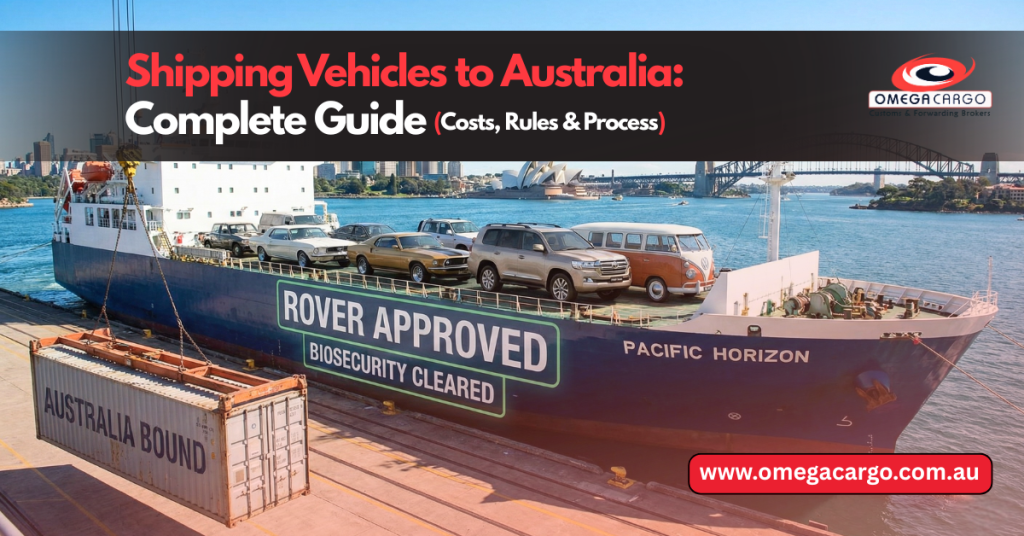
Shipping vehicles to Australia is a dream for many—whether you are a returning expat bringing the family SUV home, a car enthusiast hunting for a classic American muscle car, or a savvy buyer looking for a Japanese import. However, Australia has some of the strictest biosecurity and safety regulations in the world. Navigating the maze of permits, taxes, and shipping methods can feel overwhelming.
But don’t worry. We have done the heavy lifting for you.
This complete guide will walk you through every single step of import cars to Australia. From obtaining your import approval to calculating the Luxury Car Tax (LCT) and choosing between RoRo and container shipping, we cover it all.
By the end of this guide, you will know exactly how to get your vehicle down under safely, legally, and without breaking the bank.
If you are thinking about shipping cars to Australia, the first thing you need to know is that it is not just about booking a spot on a boat. Australia is an island nation with a fragile ecosystem, which means the government takes biosecurity very seriously.
Unlike shipping a car between the US and Canada or within Europe, sending a vehicle to Australia involves a multi-agency approval process. You aren't just dealing with a shipping company; you are dealing with:
While this sounds intimidating, thousands of people successfully import cars to Australia every year. The key is preparation. If you follow the rules, the process is smooth. If you try to cut corners, you will face delays and extra costs.
In this guide, we will break down the complex jargon into simple English so you can make informed decisions.
To successfully import a car to Australia, you need to follow a strict timeline. Doing things in the wrong order (like shipping before you get approval) can result in your car being stuck at the dock or exported back to where it came from at your expense.
Here is the proven roadmap for success:
Before you even look at shipping quotes, you must confirm that your vehicle is allowed to enter Australia. Not every car is eligible. Generally, you can import a vehicle if:
You must apply for approval through the ROVER system (Road Vehicle Regulator).
Australia has a zero-tolerance policy for asbestos. This is critical for used and classic cars. You may need to have your car tested by a certified specialist before it leaves the origin country. If asbestos is found in brakes, clutches, or gaskets, those parts must be removed and replaced before shipping.
Your car must be spotless. Soil, seeds, plant material, and insects are banned. A rigorous steam clean of the undercarriage, engine bay, and interior is mandatory.
Once approval is granted and the car is clean, you can book your freight. You will choose between RoRo (Roll-on/Roll-off) or Container shipping.
Upon arrival, your vehicle will be inspected by biosecurity officers. If they find dirt, it goes for cleaning (at your cost). Once cleared, you pay your Import Duty, GST, and Luxury Car Tax (if applicable).
You cannot drive the car straight home from the port. It must be trucked to a compliance workshop to ensure it meets Australian Design Rules (ADR). Once compliant, you can register it in your state (NSW, VIC, QLD, WA, etc.).
Understanding car import rules in Australia is the difference between a smooth import and a nightmare. The regulations have changed significantly in recent years with the introduction of the Road Vehicle Standards (RVS) legislation.
Gone are the days of paper forms. All applications now go through an online portal called ROVER. You will need to create an account, verify your identity, and submit your vehicle details.
If you are shipping vehicles to Australia from the USA, Europe, or parts of Asia between September 1st and April 30th, you are in the Brown Marmorated Stink Bug (BMSB) season.
If your car has air conditioning, the gas may be controlled.
When you look for a car shipping Australia cost, the price depends heavily on how you ship it. There are two main methods: RoRo and Container.
Think of this like a giant floating parking garage. Your car is driven onto the ship at the departure port and driven off in Australia.
Your car is loaded into a steel shipping container.
| Feature | RoRo (Roll-on/Roll-off) | Shared Container | Sole Use Container |
| Cost | Lowest | Moderate | Highest |
| Security | Good (Parked on deck) | Better (Sealed) | Best (Sealed) |
| Personal Items | Not Allowed | Allowed (in your space) | Allowed |
| Speed | Faster (Direct routes) | Slower (Consolidation) | Moderate |
| Risk of Damage | Low (Minimal handling) | Low (Securely strapped) | Lowest |
| Arrival Charges | Lower | Higher (Unpacking fees) | Higher |
"How much does it cost to ship a vehicle to Australia?" This is the most common question. While prices fluctuate based on fuel surcharges and exchange rates, we can provide realistic estimates for 2025-2026.
Note: These are estimates for shipping only. Taxes and local Australian charges are separate.
Most cars ship from West Coast ports (Los Angeles, Oakland) to Sydney, Melbourne, or Brisbane.
Common routes are Southampton/London to Fremantle, Melbourne, Sydney.
Do not look at just the ocean freight quote. You must budget for:
This is the part that catches many people out. The cost to import a car to Australia includes federal taxes collected by the Australian Border Force.
If your car has a high value, you will get hit with the LCT.
Let's say you are importing a 2020 Ford Mustang from the USA.
Total Tax Payable: $2,000 (Duty) + $4,600 (GST) = **$6,600 AUD**
When you hire a freight car to Australia service, they will ask for specific paperwork. Missing documents equals delays.
You will need:
Shipping a car is not like Amazon Prime. It takes weeks on the water, plus time for customs clearance.
Estimated Transit Times (Port to Port):
Add at least 1-2 weeks on either side for dropping off the car, loading, unloading, and clearing customs.
Australia has a thriving culture of importing used JDM (Japanese Domestic Market) cars and classic American muscle cars.
This is the golden ticket for car enthusiasts. If a vehicle was manufactured 25 years ago or more, it is much easier to import.
If the car is newer than 25 years, it must be listed on the Specialist and Enthusiast Vehicle Scheme (SEVS) Register.
"Can I drive a Left-Hand Drive car in Australia?" The answer is: Yes, but with restrictions.
Australia drives on the left side of the road, meaning our cars are Right-Hand Drive (RHD).
We have seen many people make avoidable errors when importing a car to Australia. Do not let this be you.
Choosing the right partner is crucial. You want a company that specializes in the Australian route because of the specific biosecurity and ROVER requirements.
While we don't endorse a specific brand, you should look for companies that offer:
Buyer Intent Tip: When requesting a quote, ask them explicitly: "Does this quote include the Australian port charges and customs clearance fees?" Many cheap quotes exclude these, hitting you with a $1,000 bill upon arrival.
Only if you use container shipping. If you ship via RoRo (Roll-on/Roll-off), the vehicle must be completely empty. In a container, you can pack boxes, but you must declare everything to customs, and it may increase the quarantine inspection time.
The standard rate is 5% of the vehicle's customs value. However, if the car is 30+ years old, the duty is 0%. You will still have to pay 10% GST on the total cost.
Yes, this is called a Personal Import. If you have lived overseas for more than 12 months and owned/used the vehicle for that time, you can bring it back as a personal import. This bypasses some of the strict compliance rules required for commercial imports.
This rule allows vehicles manufactured at least 25 years ago to be imported into Australia under the "Older Vehicles" class. These vehicles do not need to meet modern Australian safety standards (ADRs) or be converted to right-hand drive, making them popular with collectors.
Yes. Absolutely. Australia has strict biosecurity to protect its agriculture. If your car arrives with mud, grass, or bugs, it will be ordered for cleaning at the port. Quarantine cleaning fees in Australia are extremely expensive (often double or triple what you would pay at origin).
Shipping a car to Australia is a complex process, but the reward of driving your own vehicle Down Under is unmatched. Don't navigate the ROVER system and customs forms alone.
Get a Free Car Shipping Quote Today Speak to our Australia shipping experts to verify your vehicle's eligibility and get an exact cost breakdown.
Disclaimer: Import regulations and tax rates are subject to change by the Australian Government. Always consult with a licensed Customs Broker before purchasing a vehicle for export.


