Incoterms® (International Commercial Terms) are a universal set of internationally recognised trade terms published by the International Chamber of Commerce (ICC).
Incoterms® are used in international sales contracts to clearly define the respecting obligations of the seller (exporter) and the buyer (Importer)
These terms provide a common framework for managing key components of cross-border trade transactions, including:
- The allocation of responsibilities for the delivery and handling of goods.
- The distribution of costs related to transportation, insurance, customs duties, and other associated charges
- The precise point at which risk for loss or damage to the goods transfers from the seller to the buyer
- The obligations of each party concerning export and import documentation, customs clearance, and regulatory compliance
By incorporating Incoterms® into a sales or export contract, parties achieve greater legal certainty regarding their roles and liabilities. This clarity helps minimize misunderstandings, reduce commercial risk, and prevent disputes in international trade.
Incoterms® themselves are not Laws but stating the terms in your sales/export contract is a legal document.
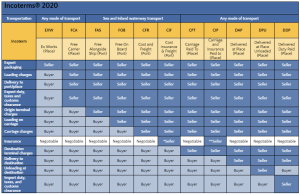
There are 11 types of Incoterms® which outline the responsibilities of the buyers and sellers as per above table and below definitions.
EXW - Ex Works:
FCA - Free Carrier:
FAS - Free Alongside Ship:
FOB - Free on Board:
CFR - Cost and Freight:
CIF - Cost, Insurance, and Freight:
CPT - Carriage Paid To:
CIP - Carriage and Insurance Paid To:
DAP - Delivered at Place:
DPU - Delivered at Place Unloaded:
DDP - Delivered Duty Paid:
*CIF requires at least an insurance with the minimum cover of the Institute Cargo Clause (C) (Number of listed risks, subject to itemised exclusions)
**CIP requires at least an insurance with the minimum cover of the Institute Cargo Clause (A) (All risk, subject to itemised exclusions)