
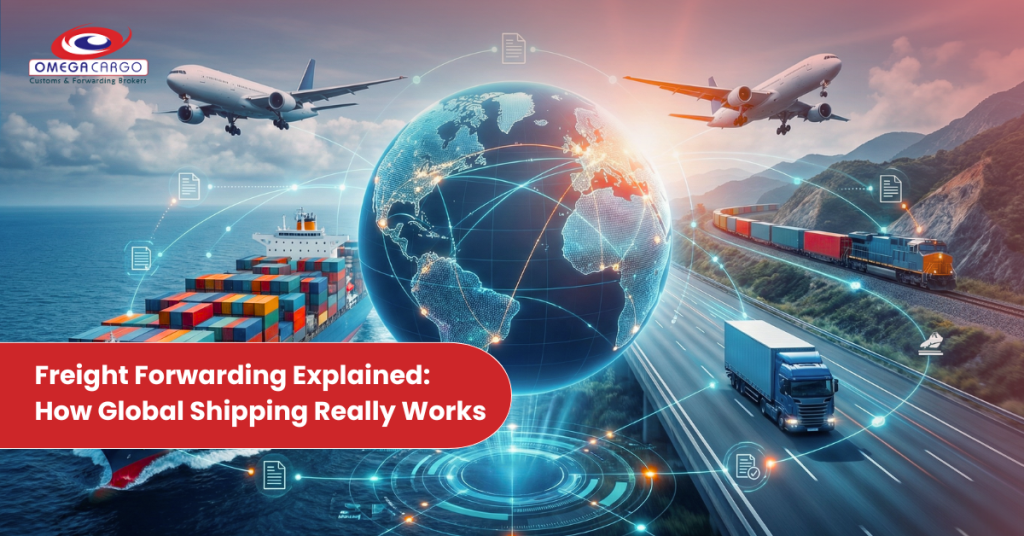
Have You Ever Wondered How a Product Travels Across the World?—how exactly did they get from a factory halfway across the world all the way to your front door?
It seems like magic, doesn’t it? You click "buy" on a website, and a few days or weeks later, a package arrives. But between that click and that delivery, your item likely traveled thousands of miles, crossed multiple borders, rode on massive ships or planes, and passed through dozens of hands. Who orchestrates this massive, complex ballet of moving goods? The answer lies in a hidden but vital industry: freight forwarding.
If you are a business owner looking to expand, or just someone curious about the mechanics of the modern world, understanding how global shipping really works is fascinating. It’s not just about moving boxes; it’s about logistics management, navigating laws, and keeping the global economy spinning.
In this extensive guide, we are going to break down freight forwarding explained in simple terms. By the end, you won’t just understand the international shipping process; you’ll feel like an expert in supply chain operations.
Let’s start with the basics. Imagine you want to plan a complicated vacation. You need a taxi to the airport, a flight to another continent, a train to a specific city, and a hotel room. You could book all of these separately, dealing with different companies, languages, and currencies. It would be a headache, right? Or, you could hire a travel agent who books everything for you in one package.
In the world of global shipping, a freight forwarder is that travel agent for cargo.
Freight forwarding is a service used by companies that deal in international or multi-national import and export. The forwarder doesn't actually move the freight itself. They don't own the massive ocean liners or the cargo planes. Instead, they act as an intermediary between you (the shipper) and the various transportation services that move goods.
Think of freight services as a giant puzzle. A freight forwarder is the person who puts the puzzle together. They utilize established relationships with carriers—trucking companies, ocean liners, and air freighters—to negotiate the best possible price to move your goods along the most economical route.
They handle the logistics management so you don't have to stress about the details. Whether it's cargo transport services via air, marine, rail, or road, the forwarder is the architect making sure your goods arrive on time and in one piece.
A freight forwarder plays a central role in logistics management by coordinating every moving part of your shipment.
Instead of you juggling multiple service providers, your freight forwarder becomes your single point of contact throughout the international shipping process.
You might be thinking, "Can't I just book a spot on a ship myself?" Technically, yes. But practically, it is incredibly difficult.
The import-export procedures involved in moving goods across borders are a nightmare of paperwork. Every country has different rules, taxes, and restricted items. If you make a tiny mistake on a form, your goods could get stuck in a warehouse for weeks, costing you a fortune. Freight forwarders are experts in this. They know the rules so you don't have to.
Here is a secret of the industry: shipping in bulk is cheaper. If you only have half a container of goods, a shipping line might charge you for a full one. A freight forwarder, however, can take your goods and combine them with goods from other customers to fill a container. This is called "consolidation." It lowers the cost for everyone involved. This is a key part of effective cargo management.
What happens if the ship encounters a storm? What if the truck breaks down? International logistics is full of risks. Freight forwarders often offer insurance services and have contingency plans. If something goes wrong, they are the ones on the phone fixing it, not you.
To truly have freight forwarding explained, we need to walk through the journey of a shipment. This is how global shipping really works, broken down into manageable steps.
The journey begins at your warehouse or factory. This step is called "export haulage." It is simply the transfer of your goods from your location to the freight forwarder's warehouse. This is usually done by truck or train. It sounds simple, but it requires coordination to ensure the goods are ready exactly when the truck arrives.
Before your goods can leave your country, they must be cleared by customs. This is where customs clearance comes into play. You need to declare what you are shipping, how much it is worth, and where it is going. Your freight forwarder will prepare and submit this documentation to the authorities. If this isn't done perfectly, the shipment stops dead in its tracks.
Once the goods arrive at the port or airport, they need to be handled. This includes unloading the truck, inspecting the cargo, and loading it into the shipping container (if it wasn't already). This stage involves many different parties, from port workers to crane operators, all coordinated by your forwarder.
This is the main leg of the journey. Your forwarder has selected a shipping line (for sea) or an airline (for air) to carry your goods across the ocean or border. This is the heart of cargo transport services. While your goods are on the water or in the air, your forwarder is tracking them, keeping you updated on their progress.
This is often the most stressful part of the shipping process. Before the goods can enter the destination country, they must clear customs again. This involves paying duties (taxes) and ensuring the goods comply with local laws.
Expert logistics management means having all the paperwork ready so this stage goes smoothly.
Once the ship docks or the plane lands, the cargo needs to be unloaded, transferred to a warehouse, and prepared for the final leg of the journey. This is similar to origin handling but in reverse.
Finally, the goods are loaded onto a truck or train and delivered to the final destination—your customer's warehouse or your own distribution center. The journey is complete!
When you work with a forwarder, you will hear a lot about different "modes" of transport. Understanding these is crucial for your supply chain management.
This is the backbone of global shipping. Roughly 90% of the world's goods move by sea.
When time is money, you choose air freight.
Trucks are the most flexible option. They can go door-to-door.
Trains are the unsung heroes of international logistics.
You cannot discuss freight forwarding explained without talking about paperwork. In import and export, documents are just as important as the cargo itself. If the papers are missing, the cargo doesn't exist in the eyes of the law.
This is the holy grail of shipping documents. It serves three purposes:
This is the bill you give to your buyer. It lists what the goods are and how much they cost. Customs uses this to calculate how much tax you owe. It must be accurate!
This details exactly how the goods are packed. How many boxes? How much do they weigh? This helps the physical handlers manage the cargo transport services safely.
Some countries have trade agreements that lower taxes. To get these breaks, you need a document proving where the product was made.
Customs clearance is the gatekeeper of global shipping. Every country wants to protect its borders and collect revenue.
Often, freight forwarders act as (or hire) customs brokers. These are licensed professionals who know the tariff codes for every product imaginable. Is a tomato a fruit or a vegetable? In the world of customs tariffs, getting this wrong can change your tax rate significantly.
If you are buying or selling internationally, you will see three-letter acronyms like FOB, CIF, or EXW. These are Incoterms (International Commercial Terms). They define who is responsible for the shipment at each stage.
Choosing the right Incoterm is a critical part of supply chain operations. It determines who pays the freight forwarder and who is liable if the ship sinks.
Why do successful companies rely on forwarders for logistics management? It goes beyond just booking ships.
A good forwarder has agents in every major port in the world. If your shipment gets stuck in Rotterdam, they have a local person who speaks the language and can go sort it out. You can't put a price on that kind of access.
Some forwarders offer warehousing. They can hold your goods in a strategic location and ship them out only when you need them. This helps you manage your cash flow and storage space better.
Modern freight services use advanced software. You can log into a portal and see exactly where your container is on a map. This visibility allows you to plan your inventory and promise accurate delivery dates to your customers.
When you are small, you ship one pallet. When you grow, you ship ten containers. A freight forwarder scales with you. You don't need to hire your own logistics department; you just utilize more of their services.
It is important to be realistic. International shipping process flows are rarely perfect. Here are challenges you might face and how forwarders help.
Weather, strikes, and port congestion can delay shipments.
Containers can fall off ships (it happens!) or goods can get crushed.
Governments change trade laws frequently (think of Brexit or trade wars).
The world of freight forwarding explained today is different from ten years ago. Technology is revolutionizing cargo management.
New companies are digitizing the entire process. Instead of calling a broker, you can get instant quotes and book shipments online, just like booking an Uber. This is making logistics management faster and more transparent.
Global shipping is a big polluter. The industry is under pressure to go green. Forwarders are now offering "carbon-neutral" shipping options, using cleaner fuels or purchasing carbon offsets. If your brand values sustainability, your forwarder can help you achieve green goals.
This technology is starting to be used to secure documents like the Bill of Lading. It prevents fraud and speeds up the release of goods, making the supply chain operations more secure.
You know you need one, but how do you pick a partner for your international logistics?
We have traveled a long way in this article. We started with a simple question about how things move and uncovered the intricate machine of global shipping.
Freight forwarding explained simply is about partnership. It is about bridging the gap between where a product is made and where it needs to be. It involves mastering logistics management, navigating complex import-export procedures, and ensuring smooth supply chain operations.
Whether you are a small business owner shipping your first pallet or a student of the industry, remember this: the global economy relies on the unsung heroes who manage freight services. Without them, the shelves would be empty.
Now that you understand how global shipping really works, you can look at that item in your hand with a new appreciation for the incredible journey it took to get to you.
Freight forwarding means hiring a professional company to manage the entire shipping process for you. A freight forwarder organizes transportation, handles documentation, manages customs clearance, and coordinates cargo transport services so your goods move smoothly from origin to destination.
Q: What is the difference between a carrier and a freight forwarder?
A carrier (like Maersk or Delta) owns the ships or planes. A freight forwarder is an agent who books space on those carriers for you and manages the paperwork and logistics.
Q: Do I need a freight forwarder for personal items?
If you are moving overseas, yes. Moving household goods involves complex customs clearance that is hard to do alone. For a small parcel, a courier like FedEx or DHL is better.
Q: What does "Logistics Management" actually mean?
It is the planning, implementation, and control of the flow of goods. It covers everything from transportation and warehousing to inventory tracking and order fulfillment.
Q: How long does international shipping take?
It depends on the mode. Air freight takes 1-5 days. Ocean freight can take 20-45 days depending on the distance and port congestion.
Q: Is insurance necessary for cargo transport services?
Absolutely. Carriers have limited liability. If your goods are damaged, the carrier might only pay a tiny fraction of the value. Cargo insurance protects your full investment.
Q: What documents are required in the international shipping process?
Common documents include a commercial invoice, packing list, bill of lading or airway bill, export declaration, and certificates required by customs authorities. Accurate documentation is essential for smooth customs clearance and efficient cargo management.


